An Image-to-Prompt Tool | Labgen (And More Than That) One of the most common frustrations in AI image generation is surprisingly simple: You see an amazing image — but you have no idea how the prompt was written. This happens whether you’re using Nano Banana, Seedream, Midjourney, or newer models like Flux. You scroll through Twitter, ArtStation, or Discord, saving image after image — yet when it’s time to create your own, you’re stuck staring at an empty prompt box. I’ve been there. That frustration is exactly why Labgen exists.
The Biggest Misconception About Learning Prompts
Most people try to learn prompting the same way: Start from scratch Memorize prompt templates Collect style keywords Experiment endlessly with trial and error While these approaches aren’t wrong, they’re inefficient. The truth is: The fastest way to learn prompts is not writing them — it’s reverse-engineering real results. Think about how people learn other creative skills: Designers study great layouts Writers analyze well-written articles Photographers deconstruct lighting and composition Prompting is no different. It’s a structured skill, not magic.
Why “Guessing Prompts” Almost Always Fails
You may have tried this: Look at an image Describe what you see Add style words Adjust parameters again and again And still… the result looks nothing like the original. Why?
Humans miss hidden details
AI images contain subtle elements: Lighting direction Material descriptions Camera perspective Style combinations Your brain filters these out automatically. 2. Prompts are not natural language Prompt quality depends heavily on: Token selection Order of concepts Implicit weighting A small wording change can completely alter the output. 3. Models recognize patterns humans don’t Many strong results come from: Reusable structures Established prompt “recipes” Model-specific phrasing Guessing is fighting the model. Understanding is working with it.
The Breakthrough: Image → Prompt
Eventually, I stopped asking: “How do I write better prompts?” And started asking: “How was this image prompted?” That shift changed everything. Instead of starting from a blank prompt, I started from finished images and worked backwards. This method — Image → Prompt — makes learning dramatically faster because: You see real-world prompt structures You understand why certain words matter You learn composition, lighting, and style together This idea became the foundation of Labgen.
What Labgen Is (And What It Isn’t)
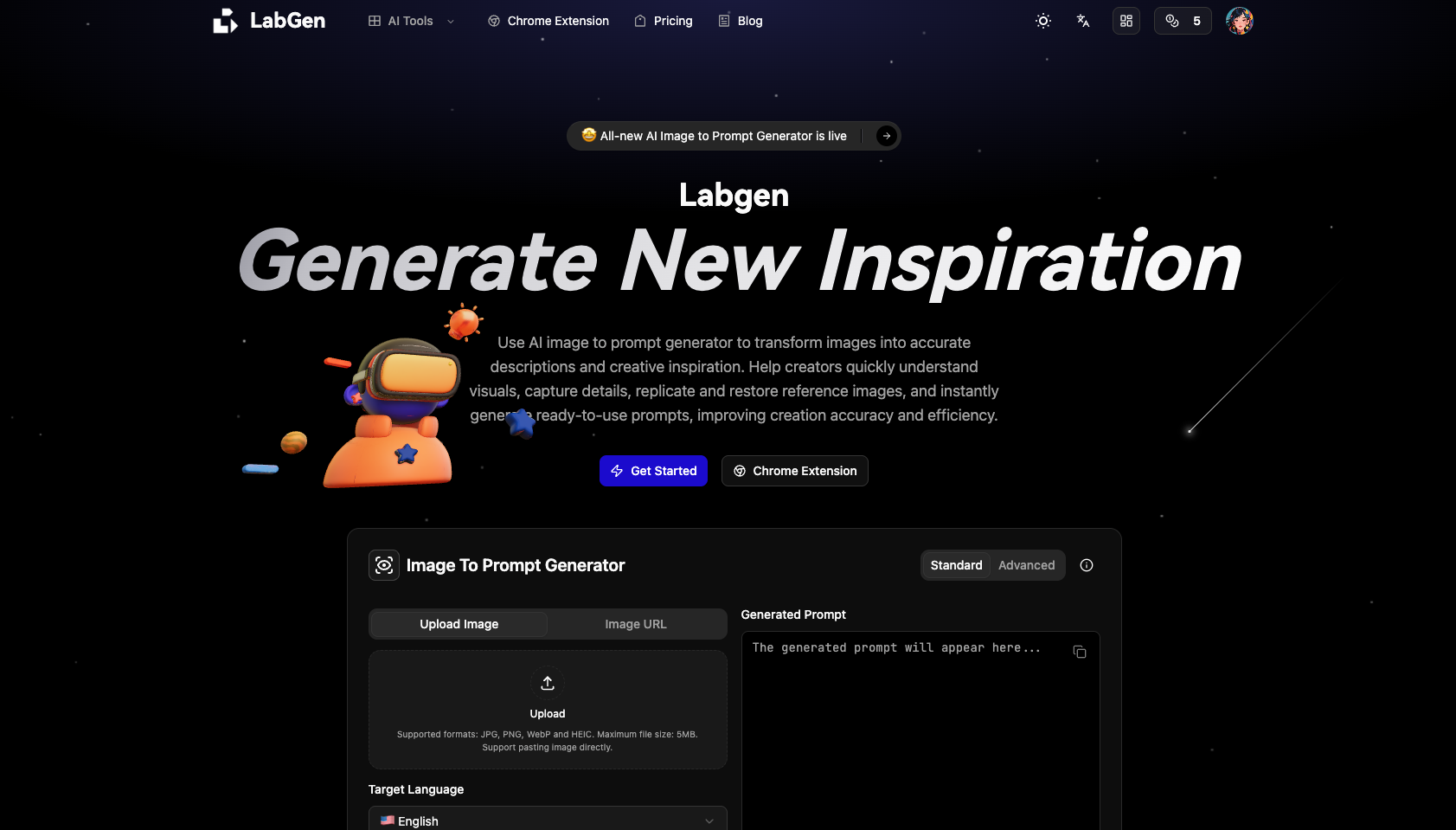
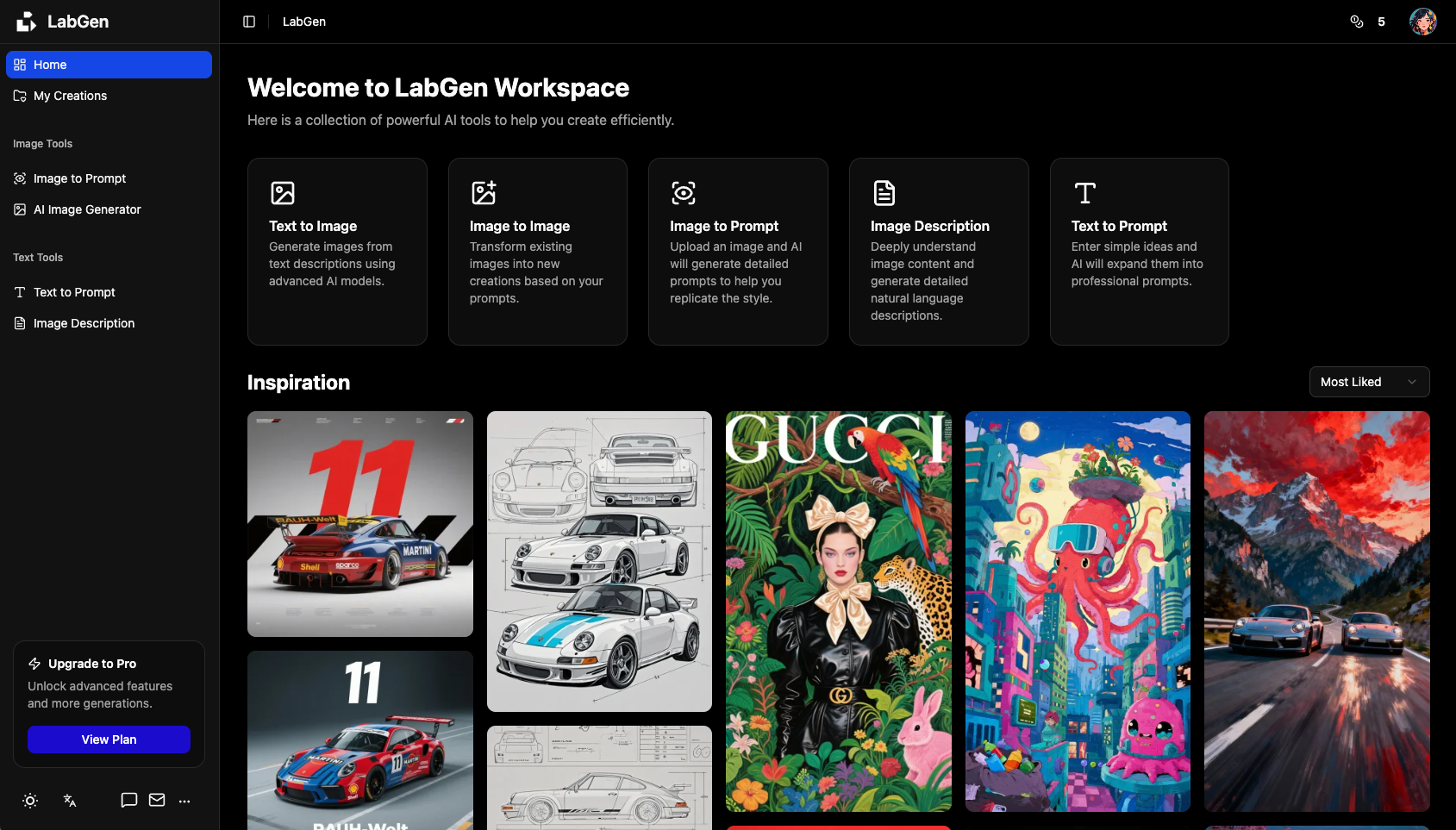
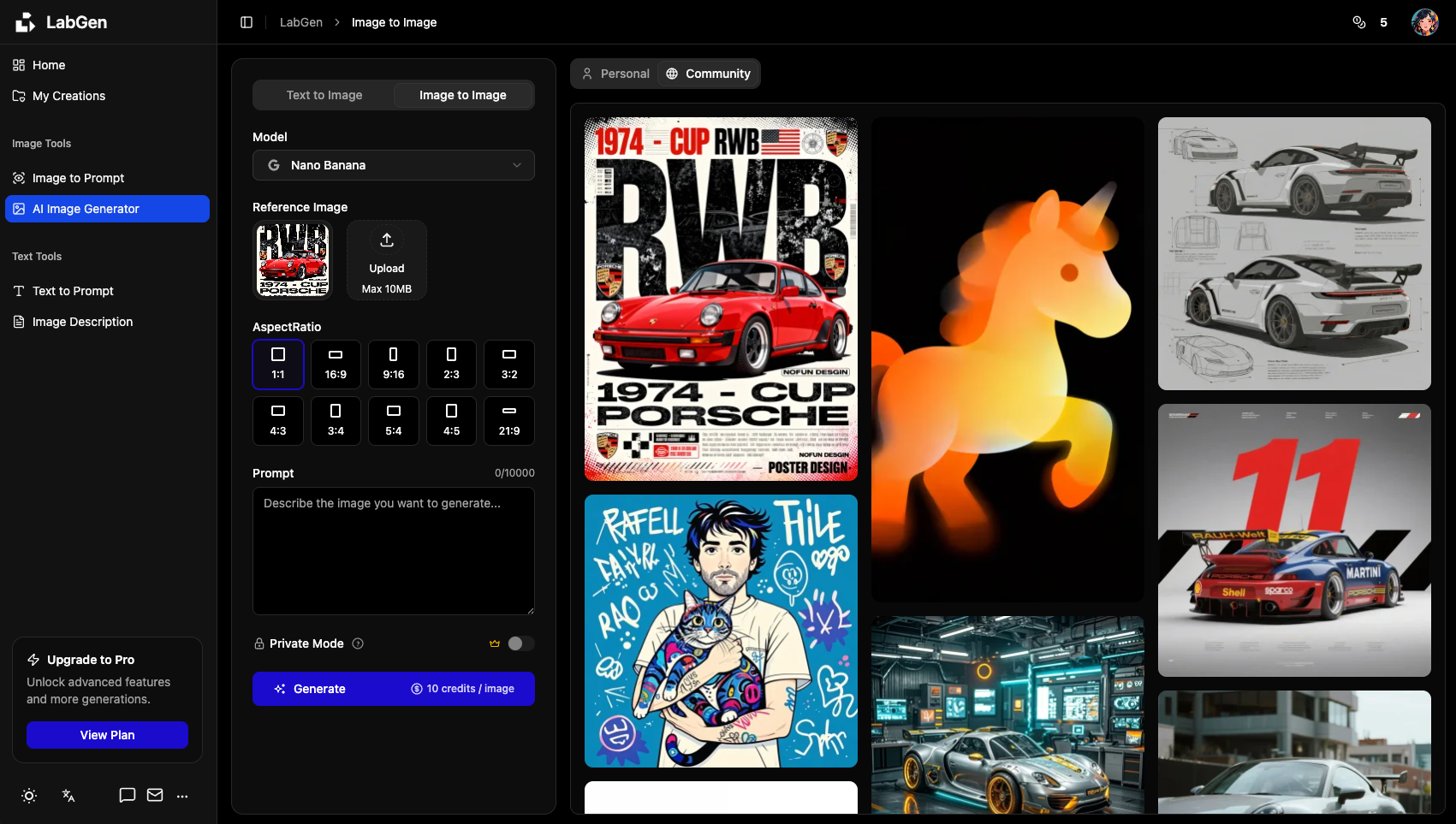
Labgen (https://labgen.ai) is built to do one thing extremely well: Turn images into reusable prompts. It’s not: A generic AI platform Another text-to-image generator A bloated all-in-one dashboard Instead, Labgen focuses on: Image-to-prompt analysis Clean, readable prompt output Practical use for real creators You upload an image. Labgen analyzes it. You get a structured prompt you can reuse or refine. 👉 https://labgen.ai